
Not affiliated with, or endorsed by, any railway operator mentioned. Times, fares and hotel details change often — check the official operator before booking. Some links in this guide may earn us a commission at no extra cost to you; see our Affiliate Disclosure for details.
Short answer: this 7-day Alps scenic train itinerary uses three of Switzerland’s great panoramic routes — the Bernina, the Glacier and the GoldenPass — in a logical loop from Zurich, with a Nightjet option to extend the trip to Vienna or to arrive by sleeper. It is designed for first-time scenic-train travellers who want big views without rushing, and it leaves hotel rates and exact train times as approximate or varies — check the operator, because timetables, reservations and prices change by season and date.
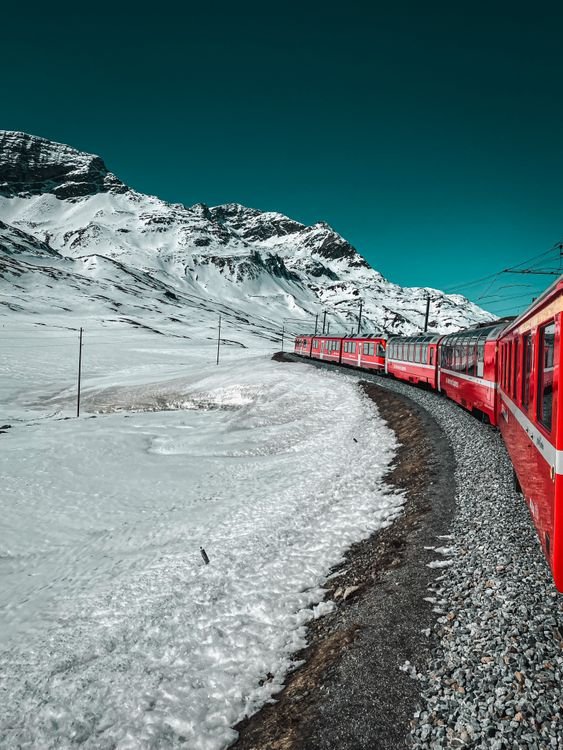
How this itinerary works
The route moves in one direction, so you are not doubling back over the same scenic section. You start in Zurich, travel to the Engadine for the Bernina, cross to Zermatt on the Glacier route, then travel west to Interlaken and Montreux for the GoldenPass, before returning to Zurich. Each day has one main train journey and time to walk, eat and rest. If you prefer a slower pace, add an extra night in St Moritz, Zermatt or Montreux and drop the optional extension at the end.
Travel times in this guide are approximate only, based on the general length of each panoramic journey, and should be checked with the operator for your date. A panoramic train day is not a quick hop; it is a full-day experience, with time to look out of the window, take photographs, and enjoy a meal on board where available. Do not plan a tight connection after a panoramic train unless the operator’s timetable for that date clearly allows it.
Reservations are a key practical point. Some panoramic trains require a seat reservation, others offer different classes, and availability varies by season. Check the official operator site for each leg before you travel, and book popular panoramic sections as early as you can once your dates are firm. For general booking advice, see our guide to booking European sleeper trains and our first-time sleeper train guide.
Day 1: Arrive in Zurich and settle in
Arrive in Zurich, check into your hotel, and spend the afternoon on a gentle walk by the lake or through the old town. Zurich is an easy arrival city: the main station is central, public transport is clear, and you can buy food, a Swiss travel pass if you need one, and any last items for the week. Keep this day light, especially if you have flown in. A good night’s sleep in Zurich makes the Bernina day far more enjoyable.
If you are arriving by Nightjet, the same logic applies in reverse. For example, our Amsterdam to Zurich Nightjet guide explains how an overnight arrival can give you a full first day, but you should still plan a gentle start. For Zurich hotel ideas near the station, see our guide to hotels near Zurich HB. Hotel rates vary by date and hotel — check the hotel directly; this guide does not quote hotel prices.
Day 2: Zurich to St Moritz
Travel from Zurich towards Chur and on to St Moritz, in the Engadine valley. This is a travel day in its own right, with changing scenery as you leave the lowlands and climb into the mountains. Sit on the side of the train that faces the valley where you can, keep your camera accessible, and break the journey in Chur if time allows. Chur is a pleasant old town and a natural gateway to the Bernina and Glacier routes.
Arrive in St Moritz in the afternoon, check in, and take a short walk around the lake or village. Do not try to add a second long train journey on this day. St Moritz is high, the air is clear, and a slow evening will help you enjoy the Bernina properly the next morning. Pack your day bag for the Bernina the night before, with water, snacks, a warm layer, and a charger.
Day 3: Bernina Express to Tirano and back
Day 3 is the Bernina day. The Bernina route runs from the Engadine over the Bernina Pass to Tirano in Italy, crossing high bridges, passing glaciers, and dropping down through palm-lined valleys. It is one of the most varied railway journeys in Europe, because you start in high Alpine scenery and end in a warmer, Italian landscape. The journey is long, so treat it as the main event of the day, not as a transfer.
You can return to St Moritz the same day, or stay overnight in Tirano or nearby if you prefer a slower pace. Either way, check the operator for the exact Bernina service, class, and reservation rules for your date. For route, classes and booking details, see our Bernina Express complete guide. If you are choosing between the two great Swiss panoramic routes, our Bernina vs Glacier Express comparison explains how they differ.
Day 4: Glacier route from St Moritz to Zermatt
Day 4 is the Glacier day, from St Moritz or Chur towards Brig and Zermatt. This is the slowest, most famous panoramic train in Switzerland, and it is best enjoyed without rushing. The train climbs, crosses high passes, passes through deep valleys, and arrives in car-free Zermatt in the late afternoon or evening. Approximate travel time is most of a day — check the operator for your exact departure and arrival.
Zermatt is a wonderful place to end a long train day, with the Matterhorn as a backdrop, but it is also a place where you should book accommodation early in peak seasons. Again, hotel rates vary — check the hotel directly. For the premium end of this route, see our Glacier Express Excellence Class review. Even in standard panoramic classes, the views are the main luxury, so a window seat and a clear day matter more than the class name.
Day 5: Zermatt morning, then to Interlaken
Keep the morning in Zermatt slow. Walk through the village, take a short cable car or viewpoint trip if the weather is clear, and enjoy a relaxed lunch. In the afternoon, travel from Zermatt via Brig towards Interlaken. This leg is less famous than the Glacier or Bernina, but it is still beautiful, and it positions you for the GoldenPass the next day.
Interlaken sits between two lakes, with the Jungfrau region nearby. It is a practical base for one night, with plenty of hotels, restaurants and station connections. Use the evening to check the GoldenPass timetable for the next day, confirm your seat or class, and pack for a shorter, more relaxed panoramic journey. If you want an extra day in the Jungfrau region, add it here and push the GoldenPass to Day 7.
Day 6: GoldenPass from Interlaken to Montreux
Day 6 is the GoldenPass day, from Interlaken through the Simmental valley and over to Montreux on Lake Geneva. The GoldenPass is different from the Bernina and Glacier: it is greener, lower, and more pastoral, with lakes, vineyards, and Belle Époque towns. The Prestige and first-class options are covered in our GoldenPass Express complete guide, which explains Montreux to Interlaken, Prestige vs first and second class.
Arrive in Montreux in the afternoon, walk along the lakeside promenade, and enjoy dinner with a view of Lake Geneva. Montreux is a gentle end to a week of high mountains, and it is a good place to reflect on which panoramic route you liked best. Many travellers find the GoldenPass the most relaxing of the three, because the scenery is softer and the journey is shorter than the Glacier day.
Day 7: Montreux to Zurich, with a Nightjet extension
On Day 7, travel from Montreux back to Zurich, either directly or via Lausanne and Bern, depending on the timetable for your date. This is a comfortable closing day, with time for a final Zurich walk, shopping, or a farewell dinner. If you are flying home from Zurich, allow generous time for the airport transfer and check-in.
If you want to extend the trip, this is where a Nightjet makes sense. From Zurich, you can continue by overnight train towards Vienna, as compared in our Zurich to Vienna Railjet vs Nightjet guide, or towards other Nightjet destinations covered in our pillar guide, Best Luxury Sleeper Trains in Europe in 2026 — Comparison Guide. A Nightjet extension turns a 7-day Swiss itinerary into a longer European rail trip without adding a daytime travel day.
Practical tips for the whole week
- Book panoramic reservations early in peak seasons, and check each operator for your exact date.
- Pack light, with one main bag and a small day bag for panoramic days.
- Bring a warm layer even in summer, because high passes can be cool and changeable.
- Keep water, snacks, a charger, and any medication in your day bag, not in checked luggage.
- Check hotel check-in times, especially after a long panoramic day or an early Nightjet arrival.
- Do not quote this guide’s approximate times as a timetable; times vary — check the operator.
For packing, see our sleeper train packing list, which works well for panoramic days too. For a wider sleeper comparison, see our pillar guide linked above.
Frequently asked questions
Can I do this itinerary in 7 days? Yes, at the pace described, with one main train journey per day and a rest day built into the structure. Add extra nights if you want to hike, ski, or explore towns in more depth.
Do I need reservations for the panoramic trains? Reservation rules vary by train, class and season — check the operator for each leg. Book popular panoramic sections early.
How much will hotels cost? Hotel rates vary by town, season and hotel — check the hotel directly. This guide does not quote hotel prices.
Which route is best: Bernina, Glacier or GoldenPass? Bernina is the most varied, Glacier is the most famous high-Alpine journey, and GoldenPass is the most relaxing lakeside route. This itinerary includes all three so you can judge for yourself.
Can I add a Nightjet at the start or end? Yes. Arrive in Zurich by Nightjet, or leave Zurich by Nightjet towards Vienna or another destination, but check the operator for availability on your date.
Last checked: 27 October 2026. Travel times are approximate and hotel rates, fares and reservations vary — check the official operator and hotel before booking.